You probably already know the signs. There is a chalky white ring around the base of your faucets. Your dishes come out of the dishwasher with water spots, no matter how many times you run them. Your shampoo barely lathers, and after a shower, your skin feels tight and dry. You clean the bathroom, and within a few days the buildup is back. If any of this sounds familiar, hard water is almost certainly the cause.
For homeowners in Sarasota County, Manatee County, and Charlotte County, hard water is not an occasional nuisance. It is a daily reality, and it carries costs that most people do not connect to their water until those costs start adding up in noticeable ways.
Why Southwest Florida Has Hard Water
Florida sits on a thick bed of limestone and dolomite rock. As rainwater percolates down through that rock and into the aquifer system that supplies much of the region’s water, it dissolves calcium and magnesium minerals along the way. By the time that water reaches your home, it is carrying a significant mineral load.
Water hardness is measured in grains per gallon (GPG). Water above 7 GPG is generally classified as hard; above 10.5 GPG is very hard. Water hardness levels in parts of Sarasota and Manatee counties routinely fall into those upper ranges, depending on the source and the specific distribution area. Well water users in Charlotte County often see some of the highest hardness levels in the region.
This is not a treatment failure or a water quality violation. It is simply the geology of where we live. But that does not mean you have to accept the consequences.
The Real Financial Cost of Hard Water
Hard water is not just an inconvenience. Over time, it creates measurable financial drain in several areas of the home.
Water Heater Efficiency and Lifespan
Scale buildup inside a water heater is one of the most costly effects of hard water. As mineral deposits accumulate on the tank lining and heating elements, the unit has to work harder to heat the same amount of water. Research from the Water Quality Research Foundation found that water heaters operating on hard water can lose a meaningful percentage of their efficiency over time compared to units running on softened water. Tank-style water heaters typically last 8 to 12 years; scale buildup can shorten that lifespan significantly, pushing you toward an early replacement that runs $800 to $1,500 or more installed.
Washing Machines and Dishwashers
The internal components of washing machines and dishwashers, including valves, hoses, and heating elements, are vulnerable to the same mineral scaling that affects water heaters. Residue builds up in places you cannot see and cannot easily clean. Over years of use on hard water, appliances cycle through more repairs and reach the end of their usable life earlier than they would on softened water. A washing machine that should last 10 to 14 years may need replacement or significant repair well before that point.
Soap, Detergent, and Cleaning Products
Calcium and magnesium ions in hard water react with soap and detergent molecules, reducing their effectiveness and requiring you to use more product to get the same result. This applies to dish soap, laundry detergent, shampoo, body wash, and household cleaners. Most households do not realize they are consistently overusing these products because of their water, but the cost accumulates steadily across every load of laundry, every shower, and every load of dishes.
Cleaning Time and Descaling Products
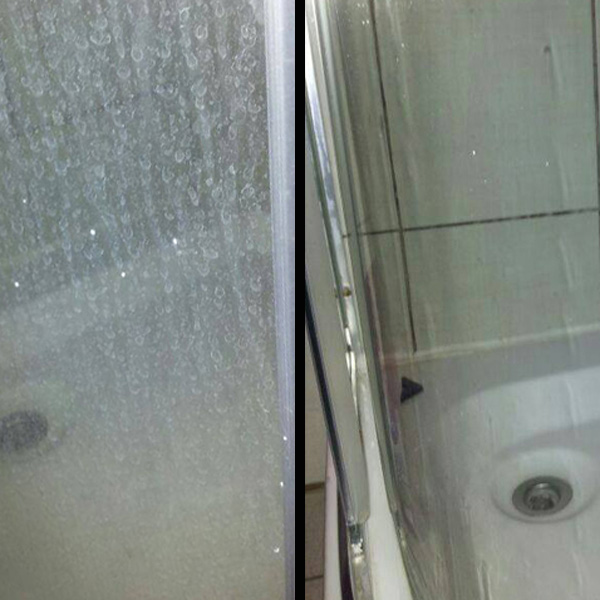
The white scale on your faucets, showerheads, and tile grout does not clean off easily. Removing limescale requires either significant scrubbing or acidic descaling products, and it comes back quickly in a hard water home. The time you spend on this and the products you buy to manage it are a recurring cost that softened water eliminates entirely.
How a Whole-Home Water Softener Addresses the Problem
A whole-home water softener works through a process called ion exchange. As water enters the system, calcium and magnesium ions are swapped out for sodium ions, which do not cause scaling or interfere with soap performance. The result is softened water delivered to every fixture, appliance, and water line in your home.
Homeowners who switch to softened water typically notice the difference quickly: dishes come out of the dishwasher clean, soap lathers more easily, skin and hair feel different after showering, and scale stops building up on fixtures. Over the longer term, water-using appliances run more efficiently and last longer.
A water softener does add a small amount of sodium to your water, which is worth knowing. For most households this is not a concern, but homeowners on sodium-restricted diets often pair a softener with a reverse osmosis drinking water system at the kitchen tap, which removes sodium along with other dissolved solids.
Local Knowledge Makes a Difference
Water World Purification Systems has been treating water for homeowners throughout Sarasota County, Manatee County, and Charlotte County for many years. We know the regional water chemistry and the specific challenges that come with it, whether you are on municipal water in Sarasota or on a private well in Charlotte County.
The right softener size and configuration depend on your household’s water usage and the actual hardness level of your water. We do not recommend a system until we understand what your water looks like, which is why we start with a water assessment.
Find Out What Your Water Is Actually Doing to Your Home
If you have been living with the symptoms of hard water, a water test is the logical first step. It tells you exactly how hard your water is and gives you a clear basis for deciding whether a softener makes financial sense for your household.
Water World Purification Systems offers free water assessments for homeowners throughout Sarasota County, Manatee County, and Charlotte County. Contact us today to schedule yours.